BMJ Open has published this important study led by José Ignacio Recio, with participation from APISAL, the University of Salamanca, and the Salamanca University Healthcare Complex, which examines sleep disorders and their variations by gender and psychosocial factors.
Among men, those over 65 with a college education and low levels of anxiety and depression show the best sleep efficiency, despite sleeping for a shorter total duration.
Sleep is an essential biological function that is critical to individual and public health due to its direct implications for an increased risk of cardiovascular and metabolic diseases, mental disorders, and other conditions. In Spain, the Spanish Society of Neurology (SEN) revealed in 2024 that 48% of the adult population did not get quality sleep, and the Royal National Academy of Medicine of Spain noted on March 14, World Sleep Day, that more than 4 million Spaniards suffered from some form of chronic insomnia, equivalent to 10% of the population.
IBSAL has just published an article in BMJ Open an innovative study that provides relevant information for understanding sleep patterns in the Spanish adult population and helps identify potential determinants of sleep quality, “especially when considering gender differences and psychosocial factors,” explains IBSAL researcher and USAL professor José Ignacio Recio Rodríguez to Comunicación USAL.
In a context where sleep disorders have a significant impact on public health, the multicenter study—coordinated by the USAL School of Nursing and Physical Therapy and conducted in collaboration with the Salamanca Primary Care Research Unit (APISAL) and the University Healthcare Complex of Salamanca (CAUSA), “helps shape more personalized, evidence-based intervention strategies, and its comprehensive approach—which combines mental health, lifestyle habits, and sociodemographic factors—reinforces its practical value in clinical and public health settings,” he emphasizes.

Infographic showing the people contacted and included in the study, broken down by age group and gender.
Tracking Activity and Sleep Cycles
Specifically, the project, conducted from May 2022 to April 2024, was carried out with the aim of “identifying differences in sleep patterns between adult men and women in Spain and understanding how factors such as age, educational level, lifestyle habits, and mental health influence sleep quality.”
Indeed, this population-based and public health perspective is one of the innovative aspects of this type of study. In other words, “rather than focusing on specific disorders, it takes a preventive approach aimed at providing a general characterization of sleep quality and its determinants,” the director notes.
To this end, the research team designed a cross-sectional study with a representative sample of 500 people aged 25 to 65, residing in Salamanca and Ávila, distributed evenly by sex and age. It is worth noting that the stratified and regionally representative sample, based on population-based health registries, “provides a level of robustness that is uncommon in sleep studies, which typically focus on clinical or convenience samples.”
Thus, each participant was assessed using actigraphy (ActiGraph GT3X+ devices), which recorded activity and sleep cycles over five days, and using the Pittsburgh Sleep Quality Index (PSQI), a standardized and validated questionnaire that measures subjective perceptions of sleep.

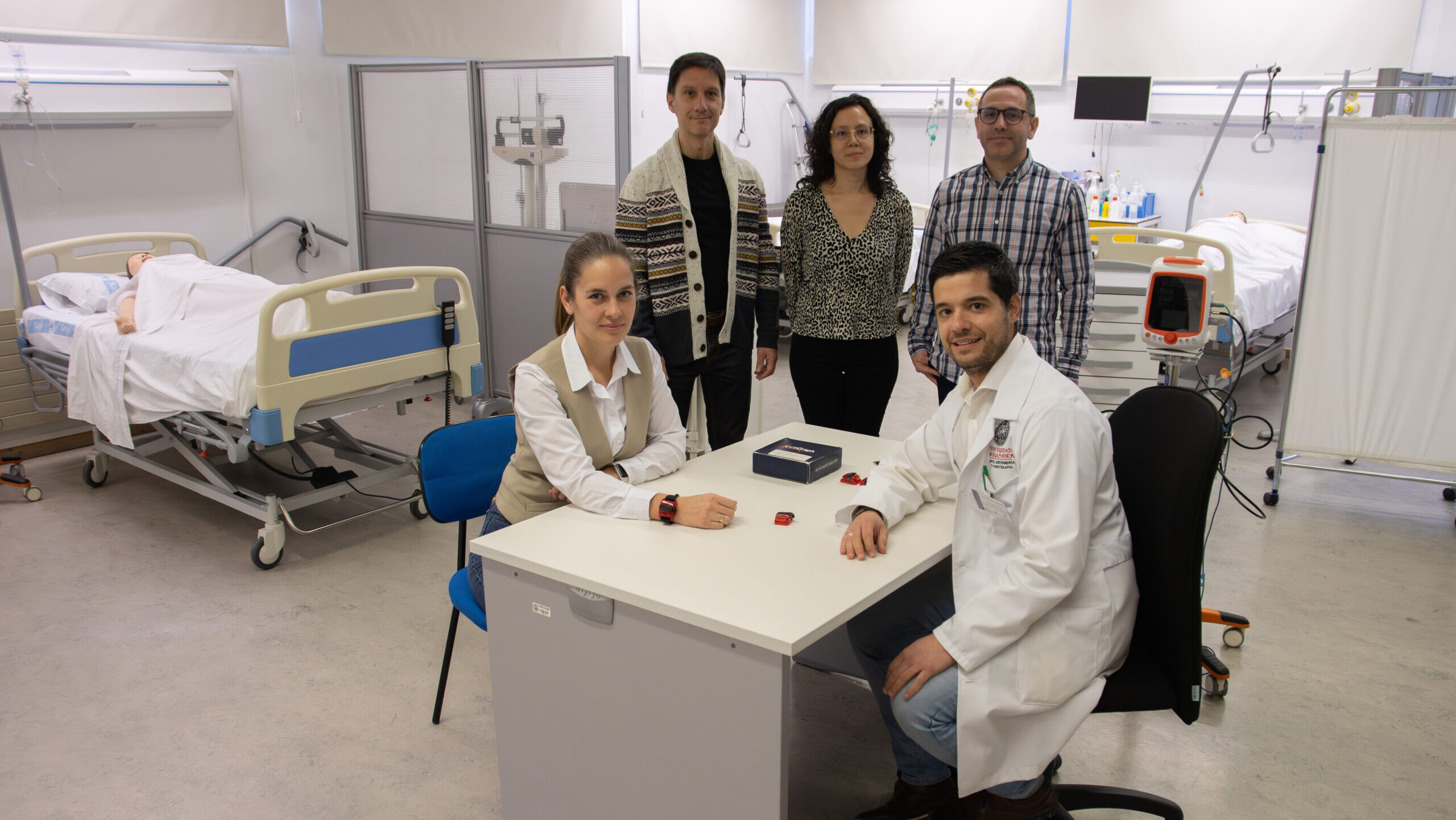
Testing the ActiGraph GT3X+ device at the School of Nursing and Physical Therapy at the University of Salamanca.
In addition to objective and subjective measures of sleep, the scientists also collected data on the participants’ lifestyle (diet, physical activity, alcohol consumption, and tobacco use), mental health (levels of anxiety and depression), and clinical conditions. The information collected allowed for a cluster analysis—a statistical technique that groups individuals with similar characteristics—to identify specific sleep profiles by sex.
In this regard, one of the innovative features of the study is that “it is one of the first Spanish studies to simultaneously combine objective actigraphy (ActiGraph GT3X+) and subjective assessment using the PSQI within the same representative sample, which strengthens the validity of the results,” they note.
Results for Men and Women
Furthermore, the use of a cluster analysis differentiated by gender is also innovative in the Spanish context and allows for the identification of specific sleep profiles associated with age, education, and emotional burden—an area that has been little explored previously. The results revealed that sleep in the Spanish population is a highly heterogeneous phenomenon. Three main profiles were identified for each sex, with age and educational level serving as determining factors.
Among men, those over 65 with a college education and low levels of anxiety and depression showed the best sleep efficiency (91.8%) despite sleeping for a shorter total duration. In contrast, young men (around 35 years old) with higher levels of anxiety and depression had lower sleep efficiency and more nighttime awakenings.
Among women, those aged 55 with low emotional distress exhibited the most stable and efficient sleep patterns, while younger women (aged 35) with more severe anxiety and depression symptoms reported poorer sleep quality, more awakenings, and lower sleep efficiency.
In both cases, psychological variables carried more weight than lifestyle factors, underscoring the close relationship between emotional well-being and nighttime rest.

Image of food and healthy living.
The Mediterranean Diet, Exercise, and Alcohol Consumption
The study also found that greater adherence to the Mediterranean diet and moderate alcohol consumption were associated with better sleep, although their influence was secondary to that of mental health. Similarly, physical exercise showed a variable relationship, depending on its intensity and the time of day.
Overall, the findings show that “sleep quality cannot be understood in isolation, but rather as the result of the interaction between psychological, clinical, social, and behavioral factors, with significant differences between men and women,” Recio Rodríguez points out.
Thus, the research initiative led by USAL demonstrates the need to approach sleep from a personalized perspective, tailoring public health interventions to each person’s emotional, sociodemographic, and lifestyle profile. Consequently, identifying these distinct patterns makes it possible to develop more effective preventive and therapeutic strategies aimed at improving the population’s sleep and overall health.
In other words, unlike most previous research in this field—which is limited to correlating individual variables with sleep quality—this new study, with its classification of sleep types based on a multivariate analysis approach (cluster analysis), makes it possible to identify population subgroups with distinct characteristics. This segmentation “enables progress toward personalized sleep health interventions, an emerging and relevant aspect of modern epidemiology,” the professor concludes.
Project Reference:
César Jiménez-Vaquero, Jesús González-Sánchez, Rosario Alonso-Domínguez, Irene A. García-Yu, Natalia Sánchez-Aguadero, Andrea Crespo-Sedano, María I. Rihuete-Galve, and José I. Recio-Rodríguez. Sex-Specific Sleep Profiles in Spanish Adults: A Cross-Sectional Actigraphy–PSQI Study with Cluster Analysis in Salamanca and Ávila. BMJ Open 2025; 15: e103094. doi: 10.1136/bmjopen-2025-103094
This project was carried out with institutional funding from the Castilla y León Regional Health Authority and the University of Salamanca.
More information:
Contact person: José Ignacio Recio Rodríguez, researcher at IBSAL and professor in the School of Nursing and Physical Therapy at the University of Salamanca. Research project leader
Email: donrecio@usal.es
Phone: 923 294500, ext. 3108