María Díez Campelo, a hematologist and researcher at IBSAL, is coordinating the UMBRELLA project-SUMMA-LEGACY project, which has secured nearly 3.4 million euros in funding from the ISCIII and involves 25 hospitals and research centers across 16 autonomous communities to advance personalized precision medicine in the treatment of myelodysplastic syndromes (MDS).
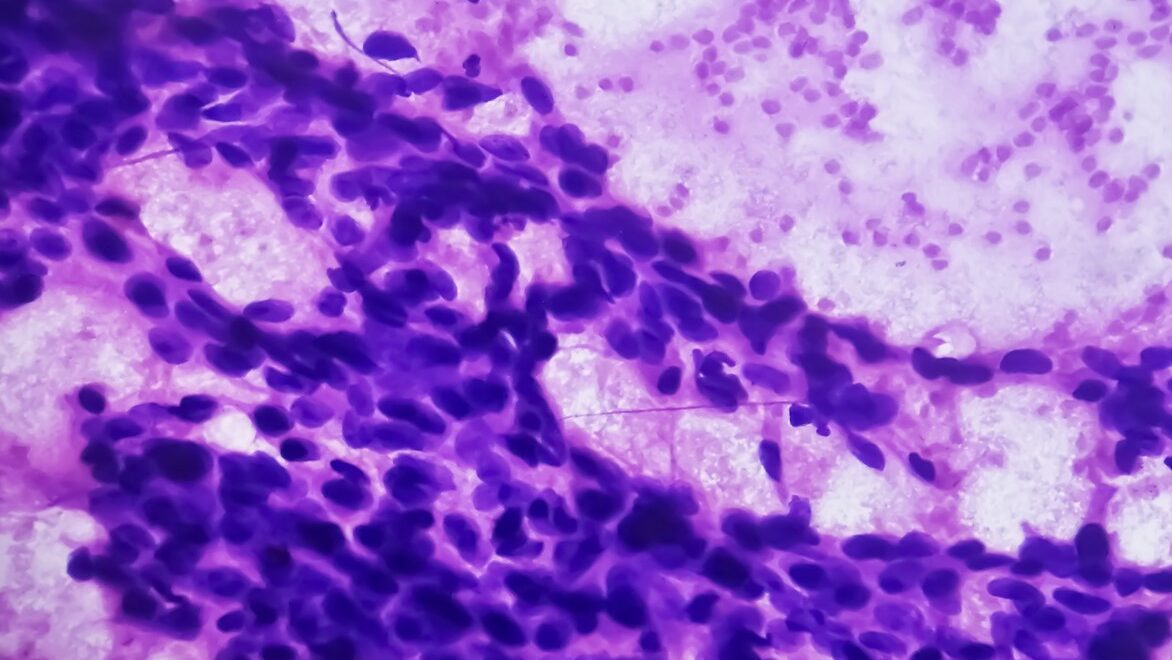
A unified platform will be created to enable a better comprehensive assessment of SMDs in Spain by incorporating clinical, genetic, and molecular data, thanks in part to the use of new diagnostic tools, such as optical genome mapping and the digitization of bone marrow images, and their subsequent analysis using AI algorithms.
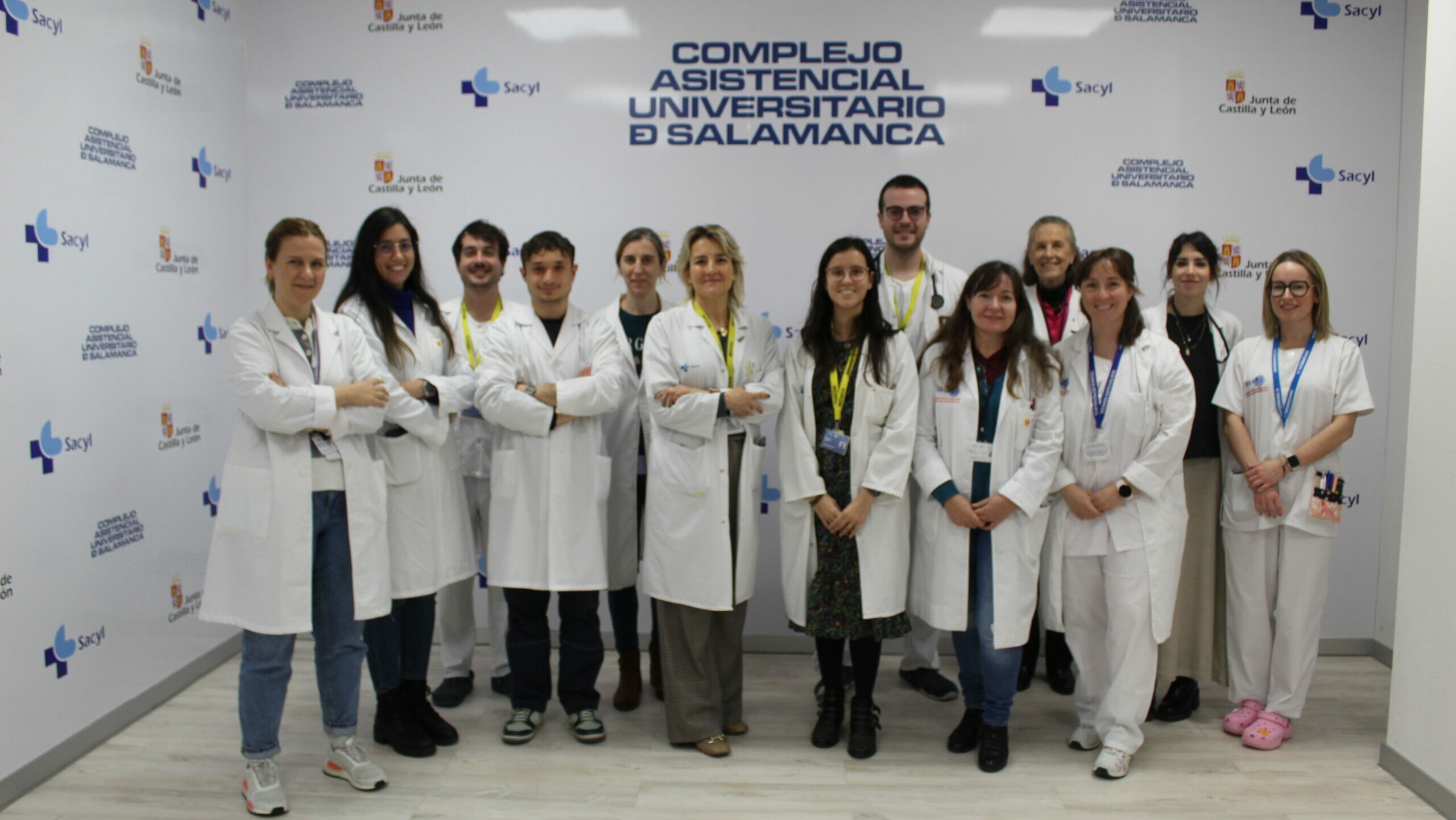
María Díez Campelo, a hematologist at the Salamanca University Healthcare Complex (CAUSA) and a researcher at the Salamanca Institute for Biomedical Research (IBSAL) , is the coordinator of the national UMBRELLA-SUMMA-LEGACY project (PMP24/00025). This project will create a unified platform for a better comprehensive assessment of myelodysplastic syndromes (MDS) in Spain, integrating personalized genomic medicine into the public health system and incorporating patient-reported outcomes.
This comprehensive and multidisciplinary tool, which will be developed in 2025 and 2026 as part of a project led by Castilla y León, CAUSA and IBSAL, will involve 25 hospitals and research centers from 16 autonomous communities thanks to nearly 3.4 million in public funding granted by the Carlos III Health Institute, and will transform the research and treatment of myeloid neoplasms to offer patients an improved quality of life and a more promising future through personalized and effective solutions in their fight against the disease.
This project is in line with the personalized medicine initiative of the Department of Health of the Regional Government of Castile and León, which aims to provide individualized diagnostic, therapeutic, and care strategies for all patients. In this study, the initiative is applied to severe myeloid hematologic diseases.
According to Dr. Díez Campelo, the significance of this study lies in the fact that “we are dealing with an orphan disease that still requires a great deal of research to make progress—one with a poor prognosis, a highly heterogeneous nature, and few effective treatments, and for which tools are required that are not yet fully implemented in the service portfolios of all hospitals, such as mass sequencing.”
Myelodysplastic syndromes, considered a type of cancer, are conditions that can occur when blood-forming cells in the bone marrow become abnormal, leading to low counts of white blood cells, red blood cells, or platelets. Although the incorporation of genomic studies has led to some advances in understanding this highly heterogeneous group of myeloid hematologic neoplasms, challenges remain regarding diagnosis, prognostic stratification, and effective treatment. Furthermore, these diseases affect a particularly vulnerable population, as the majority of active cases currently in Spain (around 2,000 new cases each year) involve people over the age of 70, who are no longer candidates for transplantation and have few treatment options.
In this context, as early as 2017, with funding from the first coordinated FIS project—as explained by the president of the Spanish Group on Myelodysplastic Syndromes (GESMD)—this scientific society began to forge a network to promote personalized diagnosis for patients. In 2020, the second coordinated FIS project, UMBRELLA—also coordinated by Dr. Díez Campelo— was launched. It aimed to serve as an “umbrella” and provide all healthcare professionals with access to next-generation sequencing to improve the prognostic classification of patients, especially in centers where these techniques are not available.” More than 500 patients were included in the project between 2021 and 2023, as new hospitals joined the initiative, and in 2023, the third FIS-coordinated project, UMBRELLA-SUMMA, was launched with the specific goal of continuing to “add more centers and ensure that an increasing number of patients benefit from these advances.”
Now that the groundwork has been laid to develop a coordinated strategy that integrates clinical, genetic, and molecular data on myelodysplastic syndromes (MDS) in the Spanish registry (RESMD), this new project “is the culmination of efforts to establish a tool that will enable all hematologists to apply personalized precision medicine for patients with myelodysplasia in Spain.”
Patient Experiences and New Diagnostic Tools
To this end, the UMBRELLA-SUMMA-LEGACY project proposes to improve the integration of registry data— including PREMs and PROMs on user-reported perceptions and experiences during the care process—and to create a centralized biobank for future studies.
“We need to fully understand each patient’s needs so we can tailor our care and improve their quality of life, because the only curative treatment is a transplant, and almost all patients are diagnosed at ages when they are no longer eligible for transplantation. On the one hand, we have a group of low-risk patients who have long survival rates but a very poor quality of life because they are dependent on blood transfusions; on the other hand, we have high-risk patients who need active treatment to survive; but in both cases, it is crucial to assess and identify their experience in order to personalize treatment,” says Dr. María Díez Campelo.
Similarly, artificial intelligence (AI) models are emerging as promising tools for the management of MDS, enabling the analysis of large volumes of data and the identification of complex patterns for personalized treatments. In addition, initiatives will be launched to improve patient diagnosis , including the validation of new tools such as optical genome mapping (OGM) and the digitization of bone marrow images, and progress will be made on predictive and prognostic strategies for patients with MDS of special interest, including patients with TP53 mutations, therapy-related neoplasms, and patients with germline predisposition.
All in all, the development of this project will represent a significant step forward in the management of myelodysplastic syndromes, benefiting not only patients but also the healthcare system as a whole by optimizing treatments, reducing the costs and toxicities of inappropriate drugs, and improve response prediction while ensuring patient satisfaction.
UMBRELLA-SUMMA-LEGACY was established based on data from more than 19,000 patients in the Spanish MDS Registry and the 25 participating hospitals —Salamanca University Hospital / IBSAL / USAL / CIC; Vall d’Hebrón / VHIO; University of Navarra Clinic / IdiSNA; Josep Carreras Leukemia Research Institute; Santiago University Hospital Complex / IDIS; Central University Hospital of Asturias / FINBA; Morales Meseguer Hospital / IMIB; Valencia University Clinical Hospital; Translational Research Group on Myeloid Neoplasms at Hospital Clínic Barcelona / IDIBAPs; Virgen de las Nieves University Hospital / Genomics and Oncology Research, GENYO / FIBAO; Dr. Negrín University Hospital of Gran Canaria / FIISC; Reina Sofía University Hospital; Burgos University Hospital; Valladolid University Clinical Hospital; León Hospital; Marqués de Valdecilla University Hospital; La Paz University Hospital / IDIPAZ; Gregorio Marañón University Hospital, HUGM; Virgen del Rocío University Hospital; Virgen del Puerto Hospital in Plasencia; Son Llázer University Hospital; Guadalajara University Hospital; Zaragoza University Clinical Hospital; Cruces Hospital; and Galdakao Hospital—although the project is open to new centers that wish to join, in keeping with the initial spirit of making this a core project of the GESMD group.
Project funded by the Carlos III Health Institute (ISCIII) and by the “European Union NextGenerationEU / Recovery and Resilience Facility – European Recovery, Transformation, and Resilience Plan (MRR/PRTR).”
IBSAL
The Institute of Biomedical Research of Salamanca (IBSAL) was established on March 21, 2011 through an agreement signed by the Ministry of Health of the Regional Government of Castilla y León and the University of Salamanca, which was joined in February 2012 by the Spanish National Research Council (CSIC). It integrates and coordinates the biosanitary research carried out at the University Hospital of Salamanca, the Primary Care Management of Salamanca and the biosanitary area of the University of Salamanca, including the Institute of Neurosciences of Castilla y León and the Institute of Molecular and Cellular Biology of Cancer.
Its scientific activity is structured in six areas, with a total of 84 research groups: Cancer (23 groups); Cardiovascular, Renal and Respiratory (11); Neurosciences (12); Infectious, Inflammatory and Metabolic Diseases (17); Gene and Cell Therapy and Transplants (6) and Primary Care, Public Health and Pharmacology (15).
For more information and contact details:
comunicacion@ibsal.es