Researchers from USAL, INCyL, and IBSAL provide new evidence on the beneficial role of certain oxidizing molecules in cellular function, challenging the traditional view that associates them primarily with damage and aging
The study, published in the journal *Redox Report*, reinforces the concept of oxidative eustress and opens up new avenues for understanding insulin resistance associated with type 2 diabetes, obesity, and aging, as well as for exploring future therapeutic strategies
Oxidizing molecules do not only cause damage to our bodies. Although they have traditionally been associated with cellular deterioration, disease, and aging, they also perform essential functions necessary for the body’s proper functioning. When produced in moderate and controlled amounts, these substances act as signals that allow cells to communicate and regulate various physiological processes. This phenomenon, known as oxidative eustress, can, among other functions, help muscles take up glucose from the blood—a process that is essential for obtaining energy and maintaining proper blood sugar levels in the body.
This has been demonstrated by researchers at the University of Salamanca (USAL), the Castile and León Institute of Neurosciences (INCyL), and the Salamanca Institute for Biomedical Research (IBSAL) in a study that provides new experimental evidence on this mechanism and demonstrates that certain conditions of moderate oxidation promote the activation of cellular signals that facilitate glucose uptake into skeletal muscle. The results reinforce the concept of oxidative eustress and open up new perspectives for understanding the alterations in glucose uptake and insulin resistance associated with diseases such as type 2 diabetes and aging.
The study, published in the international scientific journal *Redox Report* under the title “Oxidative eustress is associated with AMPK and AKT activation, GLUT4 translocation, and glucose uptake in skeletal muscle cells and fibers,” is authored by Eva Martín-Prieto, Leonardo A. Catalano-Iniesta, Escarlata Fernández-Puente, and Jesús Palomero.
“Traditionally, oxidative stress has been associated with harmful effects on the body, such as cellular damage and aging. However, this view is incomplete, since our cells need to maintain certain levels of oxidation to function properly,” explains Jesús Palomero. That level, he adds, “enables better communication between cells and tissues so they can perform their functions.”
From Oxidative Stress to Distress and Oxidative Eustress
For decades, reactive oxygen and nitrogen species (RONS) were associated almost exclusively with so-called oxidative stress, understood as a situation in which excessive production of these molecules causes cellular damage. However, advances in redox biology—which studies oxidation and reduction processes in living organisms—have made it possible to refine this concept and distinguish between two different phenomena.
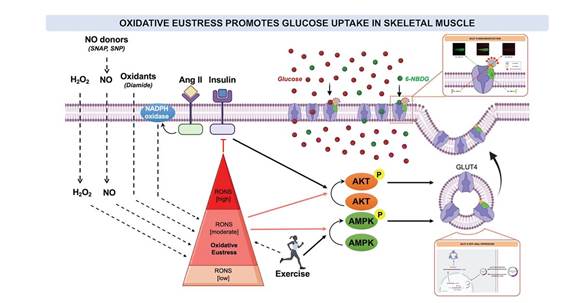
On the one hand, oxidative stress occurs when oxidizing molecules reach excessive concentrations or remain unregulated, causing damage to cells and tissues. On the other hand, oxidative eustress occurs when these substances are generated in a moderate, transient, localized, and controlled manner and participate in normal cellular communication and regulation processes.
The difference is crucial: while excessive oxidation can lead to tissue damage and loss of function, certain levels of oxidation are necessary for the body to function properly. Molecules such as hydrogen peroxide (H₂O₂) or nitric oxide (NO) can act as cellular messengers and participate in the regulation of numerous signaling pathways.
In this regard, Palomero warns that it is not simply a matter of eliminating oxidizing substances to avoid their potential harmful effects. “It has sometimes been thought that the best way to prevent oxidative damage is to reduce oxidation by administering antioxidants. However, excessive reduction can also interfere with the physiological processes that cells need to function properly,” he notes.
Therefore, the issue is not whether oxidative stress can be good or bad, but rather to distinguish between oxidative distress—associated with cellular damage—and oxidative eustress—related to the physiological signaling necessary for the body to function properly.

Skeletal Muscle and Glucose Uptake
In this context, the team at the University of Salamanca has focused its research on one of the body’s fundamental metabolic functions: the ability of skeletal muscle to take up glucose from the blood.
This tissue, which enables voluntary body movements, is one of the main factors responsible for removing glucose from the bloodstream and plays an essential role in maintaining blood glucose levels.
To take up glucose, muscle cells use, among other mechanisms, a transporter protein called GLUT4, which moves from inside the cell to its membrane. Once it is located on the cell surface, it facilitates the entry of glucose, which the muscle can use as an energy source.
When muscle tissue becomes less responsive to insulin—a hormone that helps regulate this process—a condition known as insulin resistance develops. This condition reduces the ability of muscle cells to remove glucose from the blood and contributes to hyperglycemia, that is, an increase in blood glucose levels. This is a characteristic feature of type 2 diabetes that can also occur as people age.
In this context, identifying mechanisms that facilitate the uptake of glucose into muscle cells is particularly important for understanding how metabolism is regulated and which processes may be disrupted in certain diseases.
The study shows that conditions consistent with oxidative eustress are associated with the activation of two important cellular signaling proteins, AKT and AMPK, with increased transport of GLUT4 to the membrane, and with increased glucose uptake.
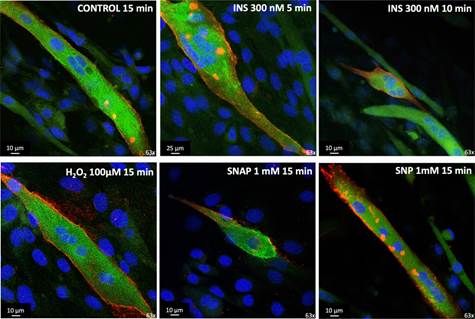
To analyze these processes, the researchers used C2C12 muscle cells and individual muscle fibers isolated from mouse skeletal muscle. Among the various stimuli studied, they observed that hydrogen peroxide promoted glucose uptake in a concentration-dependent manner, while certain conditions related to the availability of nitric oxide also increased this uptake.
The results reinforce findings from previous studies and provide new evidence regarding the role of oxidative signals in muscle metabolism.
“When it comes to skeletal muscle and glucose uptake, we are reinforcing the idea that certain levels of oxidation can promote glucose uptake,” explains Palomero.

From Combating Oxidants to Understanding Cell Signaling
Beyond the specific findings on muscle metabolism, this work is part of a broader conceptual shift within redox biology.
As the researchers explain, contrary to the old view based on a simple dichotomy between “bad oxidants” and “good antioxidants,” we now know that reactive oxygen and nitrogen species are part of a genuine cellular language. Their effect depends on their nature, concentration, location, and duration.
Thus, the goal of the research can no longer be limited to eliminating oxidizing molecules; it must also include understanding how these signals are generated and transmitted, what functions they regulate, and under what circumstances a state of oxidative eustress can turn into oxidative distress.
“Our cells need an appropriate level of oxidation to perform their functions—for example, glucose uptake, which we have addressed in this study. It is important to maintain this ‘eustress’ and prevent ‘distress’—the excess oxidation that causes damage,” Palomero emphasizes.
This perspective is driving the development of what is known as “Redox Biomedicine,” a field of research that aims to apply knowledge of oxidative signaling mechanisms to the understanding of diseases and, in the long term, to the identification of new preventive or therapeutic strategies.
New Perspectives on Diabetes and Aging
Type 2 diabetes, obesity, and aging have traditionally been linked to increased oxidative damage—that is, to states of oxidative stress. However, in addition to an excess or dysregulation of these molecules, there may also be an alteration in the physiological signals that normally contribute to maintaining cellular balance.
From this perspective, the study’s findings suggest that modulating signals related to oxidative eustress may, in the future, help improve glucose uptake in cases of insulin resistance.
However, the researchers caution that the current study does not demonstrate that eustress reverses this resistance. To determine whether it can do so, at least partially, specific studies will be needed in models exhibiting this alteration.
“From a therapeutic standpoint, we are seeing that these moderate levels of oxidation promote glucose uptake, which is very interesting in diseases such as diabetes, where insulin resistance occurs and cells have difficulty taking up glucose,” explains Palomero. The researcher notes that the next step will be to test whether these mechanisms can help overcome this difficulty in experimental models of the disease.
In this regard, the team aims to gain a deeper understanding of the mechanisms that regulate oxidative eustress and to study its potential future applications. “If we understand these mechanisms well, we could identify pharmacological targets to act upon or design new drugs to activate an enzyme or channel that promotes eustress and prevents distress,” he notes.
The significance of these findings, therefore, lies not in administering oxidizing agents, but in identifying and understanding the physiological signaling pathways that facilitate glucose uptake and investigating whether they can be selectively modulated in pathological conditions.
This line of research takes a broader perspective on redox biomedicine in metabolism, neurodegeneration, and aging, with the aim of understanding how these signals play a role in both normal cellular function and the changes associated with disease and aging.
Overall, the study helps to update the traditional view of oxidative stress: oxidizing molecules are not only potential agents of damage, but also part of the language that cells use to regulate their functions. Understanding the difference between oxidative eustress and distress and learning how to modulate these signals is one of the current challenges in biomedical research.
Reference article:
Martín-Prieto, E., Catalano-Iniesta, L. A., Fernández-Puente, E., & Palomero, J. (2026). Oxidative eustress is associated with AMPK and AKT activation, GLUT4 translocation, and glucose uptake in skeletal muscle cells and fibers. Redox Report, 31(1). https://doi.org/10.1080/13510002.2026.2721882
Contact:
Dr. Jesús Palomero, full professor in the Department of Physiology and Pharmacology at the School of Medicine, University of Salamanca.
Phone: 63030 6666 1493
jespala@usal.es