The professor of Biochemistry and Molecular Biology at USAL and researcher at the IBFG (USAL-CSIC) and IBSAL is one of the 71 scientists selected in 2026, only 7 of whom are Spanish, for this membership that recognizes excellence and exceptional achievements in research.
The new members of this renowned European association will join a prestigious global community of more than 2,200 influential scientists to strengthen international networks in the life sciences.
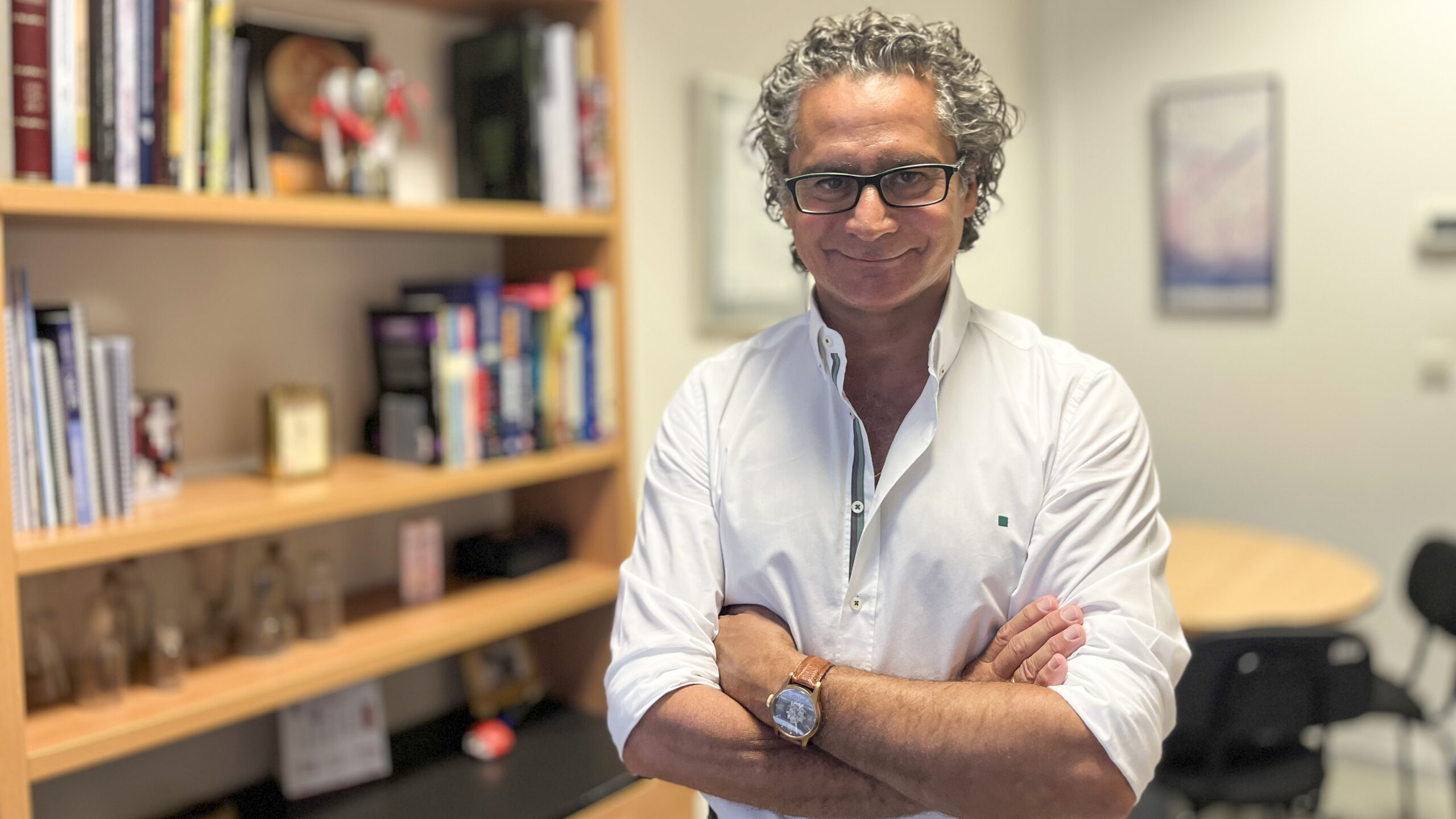
Juan Pedro Bolaños, professor of Biochemistry and Molecular Biology at the University of Salamanca, a researcher at the Institute of Functional Biology and Genomics (IBFG, a joint USAL-CSIC center), and also affiliated with the Institute for Biomedical Research of Salamanca (IBSAL), has been elected as a new member of the European Molecular Biology Organization (EMBO), a lifetime honor with which the renowned scientific organization recognizes excellence in research and exceptional achievements in the life sciences.
In total, 71 distinguished scientists from 23 countries have been selected for their outstanding achievements as EMBO members—a category for those working in member states of the EMBC (European Molecular Biology Conference)—or as EMBO associate members, for those residing outside Europe.
Specifically, the cohort selected this year (2026) consists of 60 EMBO members—35 women (49%) and 36 men (51%)—who conduct their research in 17 EMBC member states. Among them, only 7 are based in Spain: Barcelona (3), Madrid (1), Seville (1), Salamanca (1), and Valencia (1), with Juan Pedro Bolaños being the sole representative from Castile and León; Eleven EMBO associate members based in six non-European countries have also been selected.
The new members of this renowned organization, which counts 92 Nobel laureates among its ranks, now join a global community of more than 2,200 life scientists. In this regard, the director of the European Molecular Biology Organization (EMBO), Fiona Watt, emphasizes that “it is a pleasure to welcome EMBO’s new members and associate members. Their election celebrates their achievements and creativity. By contributing their unique perspectives and experiences, they will greatly strengthen the network of leading life scientists who are shaping this field.”
In the words of the USAL professor, “My election as a member of EMBO is one of the most significant recognitions of my scientific career, and I accept it with immense gratitude. I see it as recognition of the work carried out over many years alongside students, researchers, technicians, and collaborators with whom I have been fortunate to share this scientific adventure.”
“Thus, the progress we’ve been able to make in studying how brain cell metabolism influences such complex functions as cognition, aging, and neurodegenerative diseases are the result of a sustained collective effort over time and the contributions of the many people who have been part of my research group,” he adds.
Quality and Commitment from an International Research Community
As a member-driven organization, the European Molecular Biology Organization owes its prestige and impact to the quality and commitment of its scientific community. Its members serve on the EMBO Council, its committees, and editorial advisory boards, and are responsible for evaluating grant applications; in addition, associate members bring a global perspective to the organization. Together, they shape the direction of the life sciences and strengthen research communities both in Europe and beyond its borders.
Being part of EMBO represents “an opportunity to contribute more actively to an extraordinary international scientific community committed to generating knowledge, fostering cooperation, and training new generations of researchers. “I approach this new phase with enthusiasm, a sense of responsibility, and the conviction that from Salamanca we can continue to contribute to the advancement of the life sciences at the highest level, ”Juan Pedro Bolaños emphasizes.
It is worth noting that new members are selected through an annual nomination and election process, which ensures that the Organization represents a variety of research areas and emerging scientific trends. In fact, many of the new members selected in the 2026 call have demonstrated excellence in fundamental research areas such as ecology and evolution, epigenetics, and structural biology, among others.
A distinguished academic career associated with USAL, IBFG, and IBSAL
For the USAL professor, this appointment holds special emotional significance. “I was a student here, completed my doctoral dissertation, and have spent virtually my entire scientific career at the University of Salamanca and its affiliated research centers, so receiving this distinction also represents a form of recognition for an institution that has supported my work from the very beginning. I believe this is wonderful news for USAL, the IBFG, the IBSAL, and, in general, for the research being conducted in our community,” he emphasizes.
Furthermore, “I am also particularly excited to join a prestigious organization that already includes researchers I deeply admire, such as CSIC Research Professors Sergio Moreno and Francisco Antequera, with whom I also share a research center.”
The fact that the three EMBO members conducting their scientific work in Salamanca are affiliated with the Institute of Functional Biology and Genomics (USAL-CSIC) is, in Bolaños’s view, “a reflection of the scientific quality of this university institute and of the research environment that has been built up in our city. I therefore view this not as an individual achievement, but as the result of collective effort and a shared commitment to scientific excellence.”
On a more personal note, the scientist would like to express his gratitude to his family, “especially to my wife, Ángeles Almeida, a Research Professor at the CSIC, with whom I have shared projects, hopes, and challenges throughout all these years. Without her constant support and intellectual partnership, this journey would have been much more difficult. I’d also like to thank our children, who have grown up understanding that science requires dedication, but also that it’s worth it when it contributes—even if only modestly—to advancing knowledge and improving people’s lives,” he concludes.
EMBO: World-Class Research in the Life Sciences
The European Molecular Biology Organization (EMBO), officially founded in July 1964, is a renowned scientific association comprising more than 2,200 leading researchers, including members and associate members, that promotes excellence in the life sciences in Europe and beyond its borders.
Among the Organization’s main objectives are: supporting talented researchers at all stages of their careers, promoting the exchange of scientific information, and helping to create a research environment in which scientists can carry out their work at the highest level. It also aims to collaborate in shaping scientific policy by gathering input and feedback from its communities and continuously monitoring trends in science.
The EMBO Members’ Meeting, which will include an official welcome and a celebration of the induction of new members, will take place in Heidelberg, Germany, from September 30 to October 2, 2026.
_______________________________________________________________________________________
For more information: Juan Pedro Bolaños, professor of Biochemistry and Molecular Biology at the University of Salamanca and researcher at the Institute of Functional Biology and Genomics (IBFG, USAL-CSIC) and the Salamanca Institute for Biomedical Research (IBSAL). Email: jbolanos@usal.es
For more information: https://www.embo.org/
Source of the news: USAL Press Release