
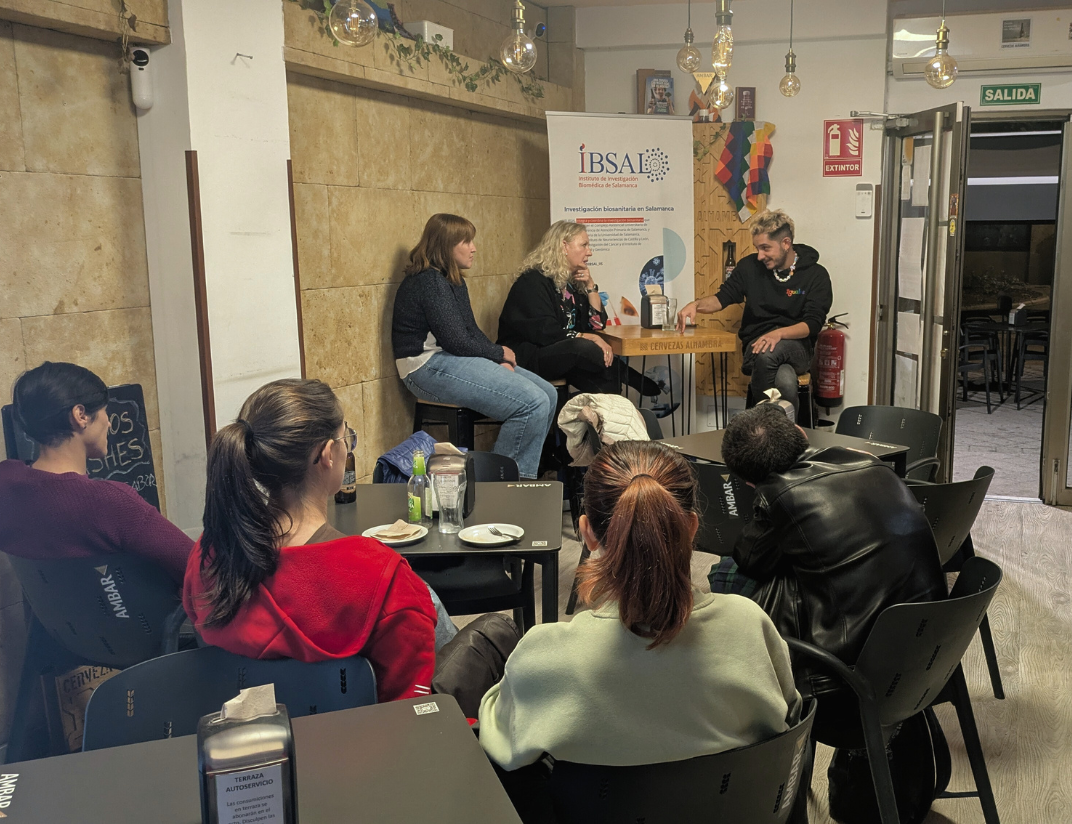
The project “Diverse and Responsible Health” aims at the scientific dissemination of the IBSAL among the LGTBI+ population of Salamanca. Through a series of workshops scheduled throughout 2025, various key issues for the health of this group will be addressed, promoting a gender and diversity perspective in medical and scientific research.
These workshops, led by the Eros Service of Asociación Iguales, will have the participation of specialized professionals, IBSAL research staff and collaborating entities. The program includes four sessions with the following topics:
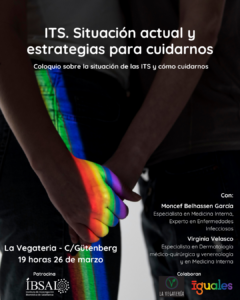
- ITS: Why do they always point the finger at us? – Analysis of sexually transmitted infections in the LGTBI+ population and the need for a person-centered approach.
Date: Wednesday, March 26, 2025, at 7:00 p.m.
Place: La Vegatería (C/ Gütenberg, 13, 37007 Salamanca)
IBSAL researchers: Amparo López, Moncef Belhassen, and Virginia Velasco
Free admission
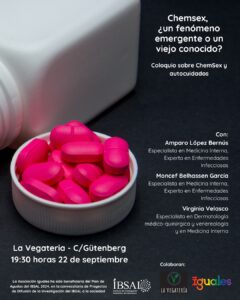
- Chemsex: An Emerging Phenomenon or an Old Familiar? – A Discussion on Chemsex and How to Take Care of Ourselves
Date: Monday, September 22, 2025, at 7:30 p.m.
Place: La Vegatería (C/ Gütenberg, 13, 37007 Salamanca)
IBSAL Researchers: Moncef Belhassen and Virginia Velasco
Free admission
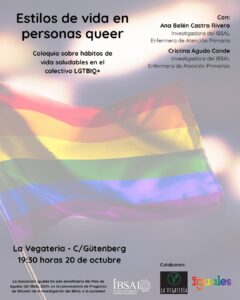
- Lifestyles in queer people – Promotion of healthy habits and analysis of health determinants in the LGTBI+ population.
Date: Monday, October 20, 2025, at 7:30 p.m.
Place: La Vegatería (C/ Gütenberg, 13, 37007 Salamanca)
IBSAL Researchers: Ana Belén Castro Rivero and Cristina Agudo Conde
Free admission
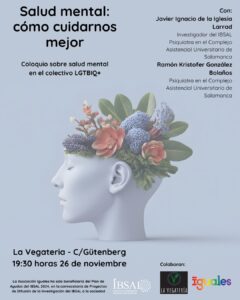
- Mental health: how to take better care of ourselves – Minority stress, discrimination and other barriers that affect the mental health of minorities.
Date: Wednesday, November 26, 2025, at 7:30 p.m.
Place: La Vegatería (C/ Gütenberg, 13, 37007 Salamanca)
Professionals: Javier Ignacio de la Iglesia Larrad and Ramón Kristofer González Bolaños
Free admission
Each workshop will combine the presentation of specialists in the field with the participation of IBSAL research staff, bringing scientific research closer to the community.
The project has the collaboration of several local entities and is supported by the University of Salamanca, the City Council of Salamanca and the IBSAL.