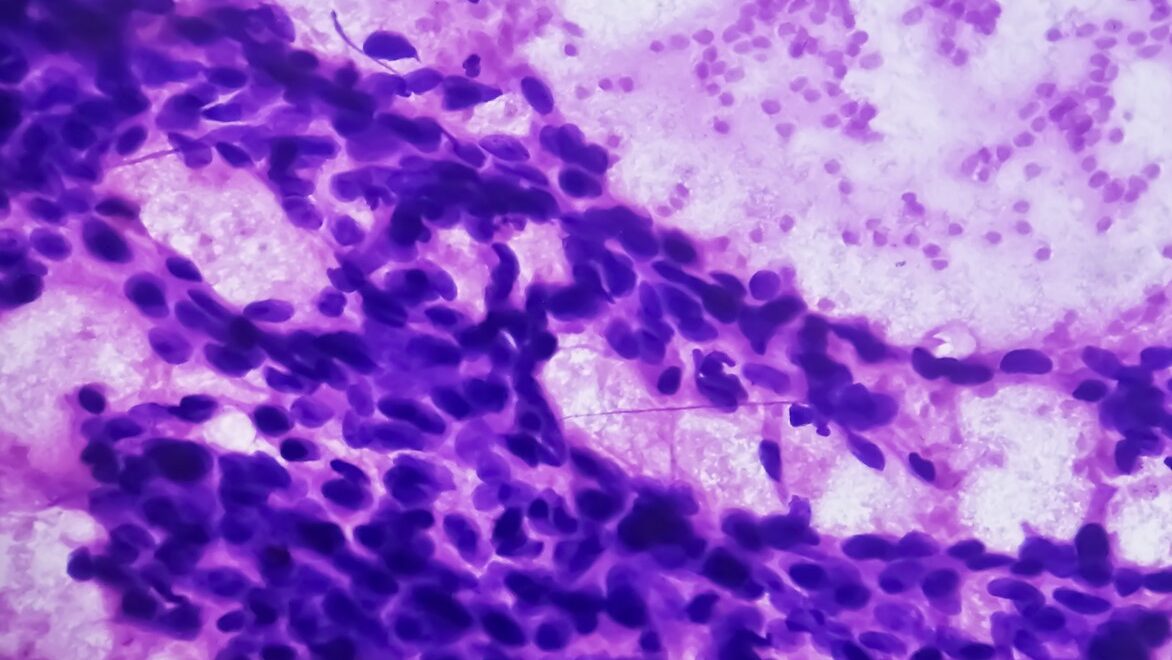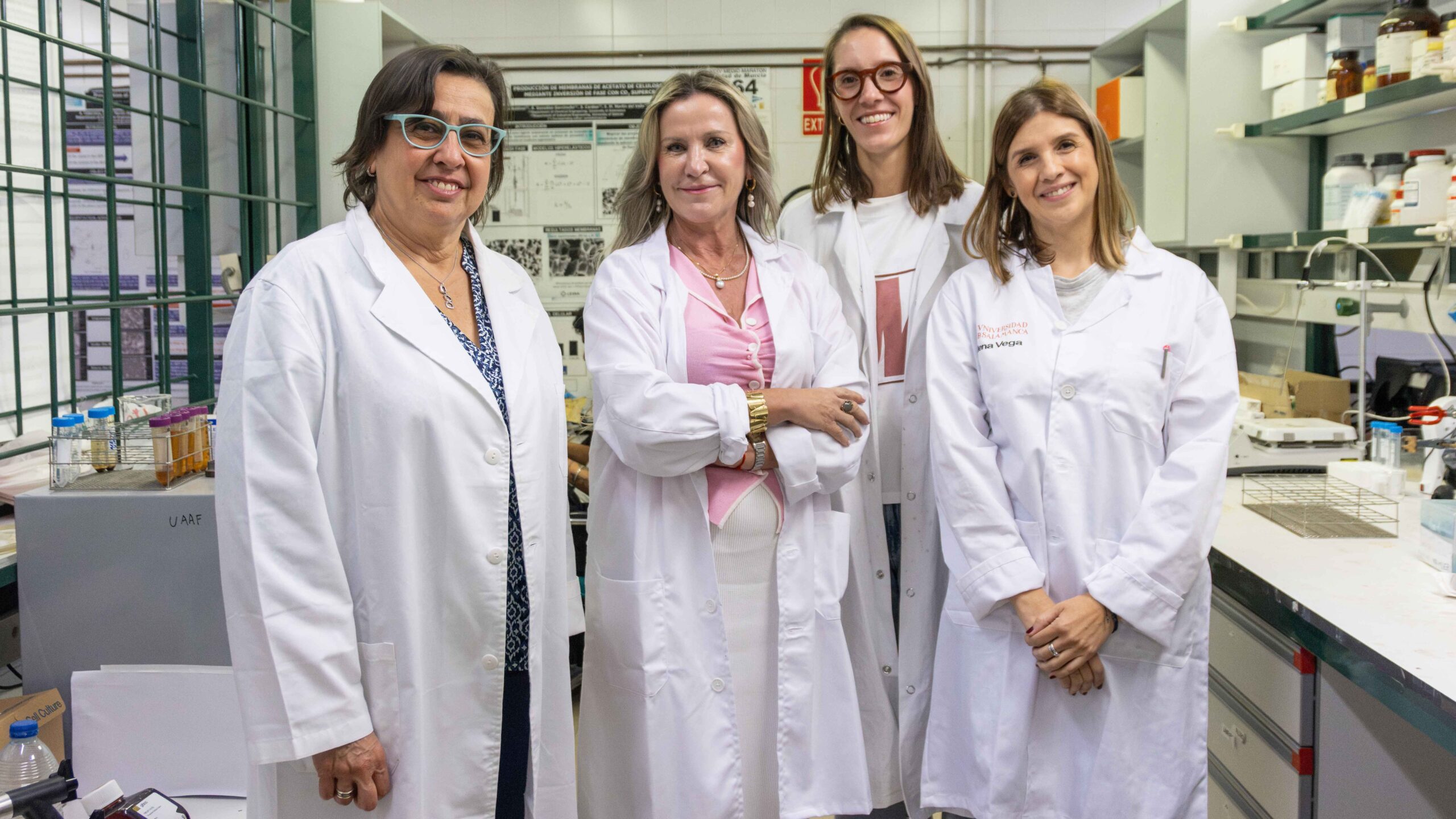
The study, led by Eva Martín del Valle (USAL-IBSAL) and Atanasio Pandiella (IBSAL and CIC: CSIC-USAL-FICUS), highlights the potential of chemical engineering and nanomedicine to develop new strategies to combat this disease
The study, published in *Materials Today Chemistry*, presents a new experimental strategy with the potential to advance toward more targeted treatments for HER2-positive breast cancer
To mark World Breast Cancer Day, observed every October 19, a study published in *Materials Today Chemistry* presents a new experimental strategy with the potential to advance toward more targeted treatments for HER2-positive breast cancer.
The study, led by Eva Martín del Valle, professor of chemical engineering at USAL and researcher at the Salamanca Biomedical Research Institute (IBSAL), and Atanasio Pandiella, a researcher at IBSAL and the Cancer Research Center (CSIC-USAL-FICUS), highlights the potential of chemical engineering and nanomedicine to develop new strategies to combat this disease. This breakthrough combines chemical engineering and cancer biology using a platform of polydopamine nanoparticles, a material inspired by the adhesive properties of mussels.
New Strategies for Treating HER2-Positive Breast Cancer
The main innovation lies in integrating three functions into a single nanosystem: facilitating the recognition of tumor cells by trastuzumab, transporting the experimental molecule MZ1 to promote the elimination of the BRD4 protein, and harnessing the antitumor activity of the nanomaterial itself. Thus, the nanoparticles act as a transport vehicle and also contribute to the therapeutic effect.
MZ1 belongs to a class of molecules called PROTACs, which use the cells’ natural machinery to eliminate specific proteins. This approach offers potential for targeting proteins involved in cancer progression, although its development requires overcoming challenges related to administration and selectivity. The proposed platform addresses these obstacles and facilitates the release of MZ1 under the acidic conditions of certain cellular compartments.
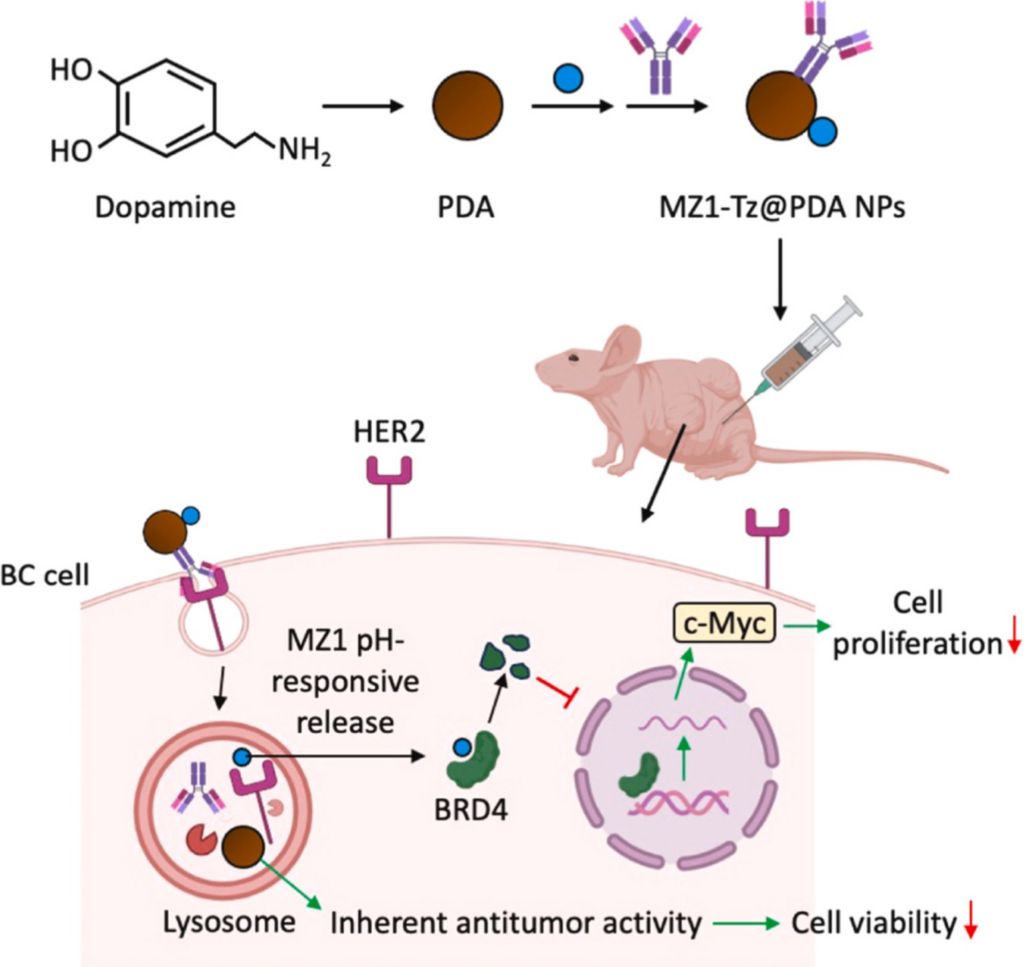
The trials demonstrated preferential uptake by cells with elevated HER2 levels, activity in three-dimensional tumor models, and a slowing of tumor growth in mice, with favorable tolerability under the conditions evaluated.
Its potential lies in facilitating the targeted administration of protein degraders and combining complementary antitumor mechanisms. Although the results are preclinical and require further research before their application in patients can be evaluated, they provide a promising foundation for the continued development of this strategy against HER2-positive breast cancer.
A promising development
Eva Martín del Valle, a researcher at USAL and IBSAL, explained: “We have designed a nanoparticle that carries a molecule capable of activating the cell’s recycling system to eliminate a protein that helps the tumor grow. What makes this special is that the nanoparticle itself also helps fight tumor cells. In mice, we’ve managed to slow tumor growth. It’s a first step, but it encourages us to keep working so that this research can one day lead to new treatment options for patients.”
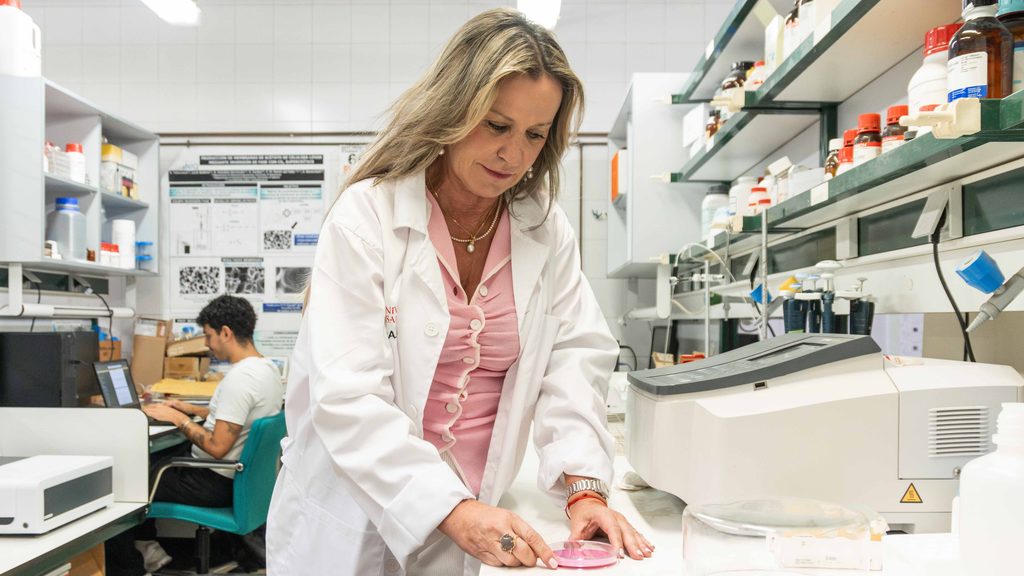
“Behind every breakthrough lies a question: How can we offer patients better options? Our work explores a new way to combat the tumor. There is still a long way to go, but the results show that it’s worth continuing the research,” said Eva Martín del Valle.
In observance of October 19, World Breast Cancer Day, this breakthrough highlights the value of interdisciplinary research in generating new treatment options.
Study Reference
Nieto, C., Díaz-Rodríguez, E., Vega, M. A., Pandiella, A., & Martín del Valle, E. M*. (2026). Bioinspired nanoformulation for BRD4 protein degradation in aggressive HER2+ breast cancer. Materials Today Chemistry, 57, 104069.
DOI: 10.1016/J.MTCHEM.2026.104069.
Contact
Eva Martín del Valle. Professor of Chemical Engineering at USAL and researcher at the Salamanca Institute for Biomedical Research (IBSAL)
923 294 500 Ext. 1511