“Communications Biology” has published a study led by CSIC researcher Ángeles Almeida, a scientist at USAL, IBFG, and IBSAL, which highlights the key role of the neural connection between the brain and the liver in the first days of life
The study reveals that a neurodevelopmental defect can prevent the liver from producing a molecule that is key to the body’s growth, even if the growth hormone is functioning properly
A team of researchers has discovered that delayed physical growth may be linked to poor nerve connections between the brain and the liver during the early stages of life. This finding, based on animal models and the study of a patient with a specific genetic mutation, reveals that the liver needs to receive adequate nerve signals to produce a key growth molecule (IGF-1), even when growth hormone and its receptors are functioning properly.
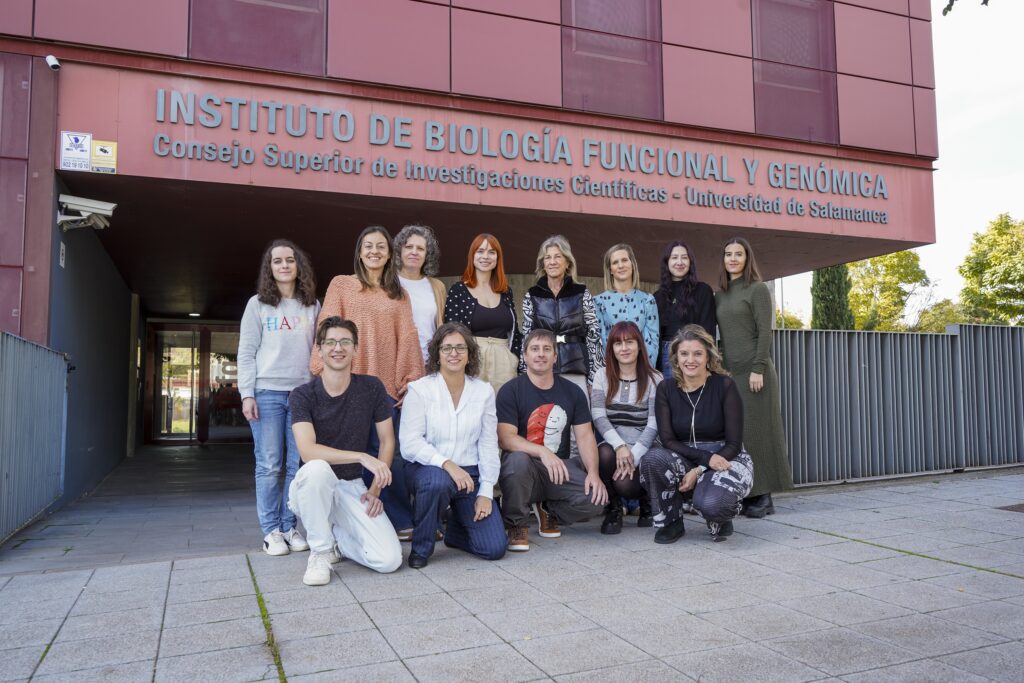
This study, led by researcher Ángeles Almeida of the Institute of Functional Biology and Genomics (IBFG, a joint center of the CSIC and the University of Salamanca) and the Salamanca Institute for Biomedical Research (IBSAL) and a professor in the Department of Biochemistry and Molecular Biology at the University of Salamanca, opens new avenues for understanding and treating growth delay in children with neurodevelopmental disorders, offering an innovative perspective on the relationship between the nervous system and physical growth.
The study, published in the high-impact scientific journal *Communications Biology*, suggests that certain abnormalities in children’s physical development may stem not from a growth hormone (GH) deficiency, but rather from an early defect in the nervous system that prevents the liver from properly receiving the signals needed to produce IGF-1, a hormone essential for postnatal growth.
“Until now, it was thought that the main problem in many patients with postnatal growth delay was due to a GH deficiency. But we have seen that it is not enough for this hormone to function properly: the liver also needs to be well connected to the nervous system,” explains Ángeles Almeida.
The Case of a Child with a Pathogenic Mutation
This work is part of a line of research on neurodevelopmental disorders that the group has been conducting for more than fifteen years. In previous studies, the researchers had demonstrated in animal models that the loss of a protein called Cdh1 disrupted the development of the cerebral cortex and caused problems such as microcephaly and deficits in neuron formation.
Years later, a team from the Quirónsalud University Hospital in Madrid contacted them after identifying a child with a pathogenic mutation in Cdh1 who presented with psychomotor disability, refractory epilepsy, and microcephaly—a clinical picture very similar to that observed in the mice developed by the Salamanca group. The team then confirmed that this mutation was responsible for the patient’s neurological abnormalities.
Subsequently, other European hospitals identified new cases consistent with Cdh1 mutations, all of which were associated with neurodevelopmental disorders and growth delay.
“We were very struck by the fact that these individuals exhibited significant growth retardation despite having normal levels of growth hormone. That’s when we decided to investigate what was really going on,” explains Ángeles Almeida.
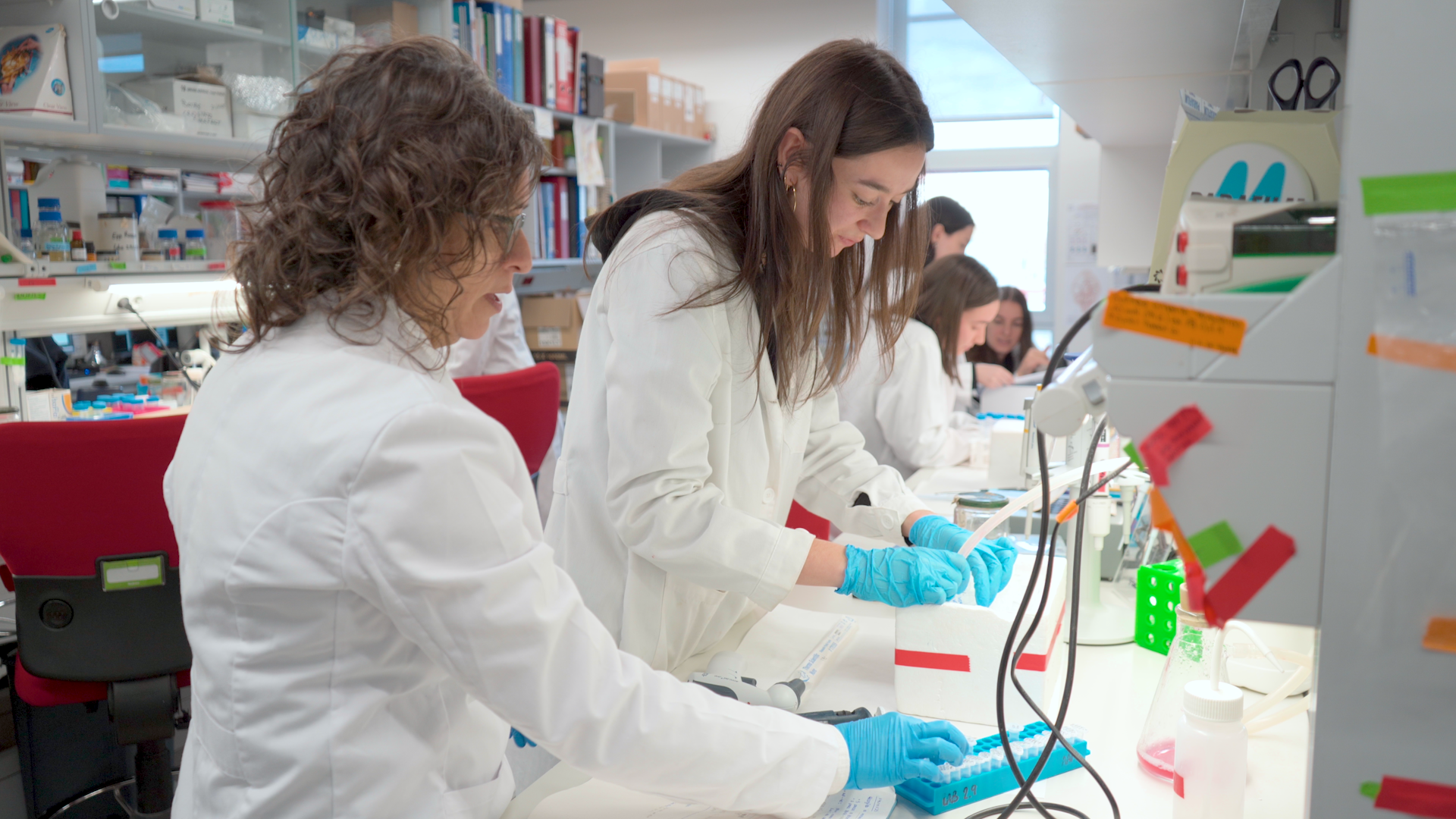
To do this, the team used mice that had been genetically modified to develop neurological abnormalities during embryonic development. They found that these animals had impaired communication between the sympathetic nervous system and the liver—that is, an abnormality in hepatic innervation during the postnatal period.
This “poor connection” reduced the activation of a molecular pathway essential for the production of IGF-1. They observed that the classic hormonal axis of growth—the hypothalamus, pituitary gland, and GH—functioned correctly, but the liver was unable to respond adequately due to the neurological disorder. As a result, IGF-1 levels decreased and growth retardation occurred.
“The liver accumulates lipids, which prevents certain proteins from interacting properly. Growth hormone arrives and activates its receptors, but the signal can no longer be transmitted, and the liver stops synthesizing IGF-1.” “That’s where the real problem lies,” Almeida sums up.
IGF-1 administration reverses the delay
One of the most significant findings of the study was that administering IGF-1 during the first few days of life reversed much of the growth retardation observed in the mice, even though the treatment did not correct the defect in hepatic innervation.
“We were able to prevent a significant portion of growth abnormalities simply by administering exogenous IGF-1. This opens the door to potential future clinical applications for certain patients with neurodevelopmental disorders, ”Almeida notes.
The results are also consistent with the findings in the child with a pathogenic Cdh1 mutation studied by the team, who had levels of IGF-1 and the proteins responsible for transporting it in the blood that were three to five times lower than normal.
In addition to challenging the traditional view of how childhood growth is regulated, the study points to a pathway that is partially independent of GH, in which the sympathetic nervous system acts as an essential mediator in the liver’s production of IGF-1.
“We always think of the brain when we talk about neurodevelopment, but the peripheral nervous system also needs to develop properly. We are convinced that this disconnect between the brain and organs such as the liver, pancreas, lungs, or heart can have very significant consequences for the body’s development,” says Almeida.
The research involved collaboration with national and international groups specializing in neuroscience, magnetic resonance imaging, pathological anatomy, and super-resolution microscopy, including centers in France, Germany, Madrid, and the Basque Country. “A highly multidisciplinary study,” as the researcher notes.
Neurodevelopment and Neurodegeneration
This work is part of a broader line of research on neurodevelopment and neurodegeneration. The Molecular Neurobiology group led by Ángeles Almeida at the IBFG and the IBSAL studies how proteins involved in early brain development also play a role later on in neurodegenerative diseases associated with cognitive decline.
“Many mechanisms that occur during neurodevelopment reappear later in neurodegenerative diseases. Understanding how neurons form and connect can also help us develop therapeutic strategies for Alzheimer’s disease, stroke, and other neurological disorders,” Almeida concludes.
The next step in the research will be to study new Cdh1 mutations and determine whether similar alterations might be involved in some cases of autism and other neurodevelopmental disorders whose causes are still unknown.
Article reference:
Verónica Bobo-Jiménez, Silvia Gomila, Rebeca Lapresa, Jesús Agulla, Julie Angibaud, Irene Sánchez-Morán, María Delgado-Esteban, Agueda González-Rodríguez, Alberto Fernández-Jaén, Pedro Ramos-Cabrer, U. Valentin Nägerl, Juan P. Bolaños, and Ángeles Almeida. “Perinatal liver sympathetic innervation governs body size.” Communications Biology (2026). DOI: 10.1038/s42003-026-09880-9.
IBSAL
The Salamanca Institute for Biomedical Research (IBSAL) was established on March 21, 2011, through an agreement signed by the Department of Health of the Regional Government of Castile and León and the University of Salamanca, which was joined in February 2012 by the Spanish National Research Council (CSIC). It is one of the 36 health research institutes accredited by the Carlos III Health Institute.
Its scientific activity is organized into six areas, comprising a total of 86 research groups: Cancer (22 groups); Cardiovascular, Renal, and Respiratory (11); Neuroscience (12); Infectious, Inflammatory, and Metabolic Diseases (19); Gene and Cell Therapy and Transplants (6); and Primary Care, Public Health, and Pharmacology (16).
For more information and contact details:
comunicacion@ibsal.es